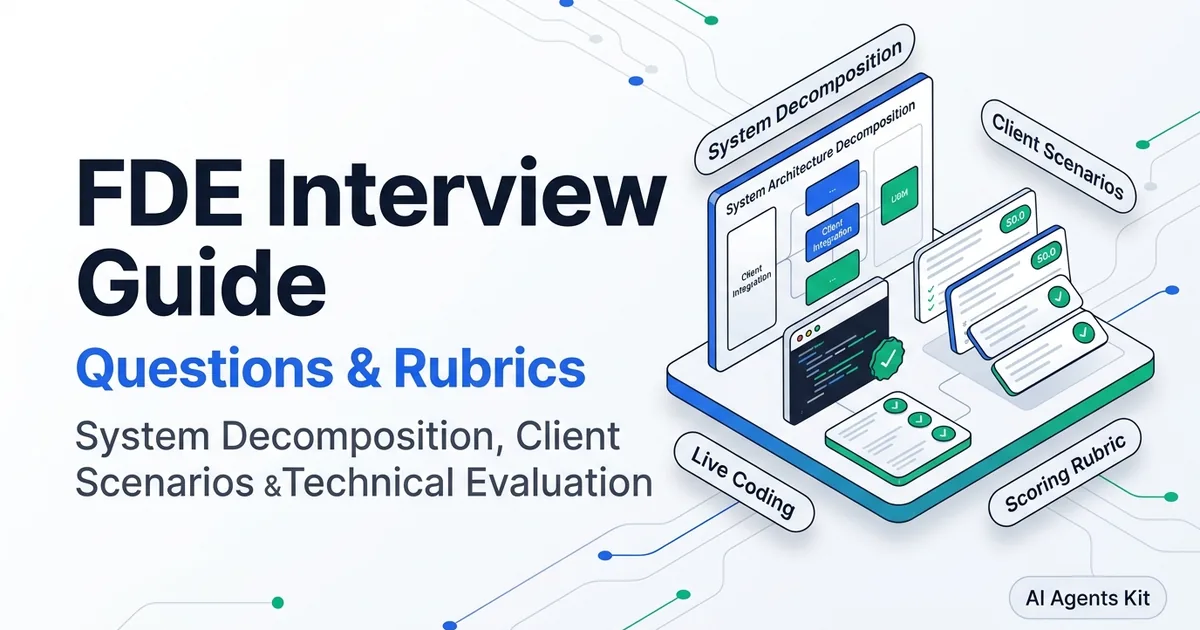
Cracking the Forward Deployed Engineer Interview: Questions, Rubrics, and Decomposition Guide
Master the forward deployed engineer interview loop. Prepare for Palantir decomposition prompts, messy codebase coding, field system design, and roleplays.
Technical interviews for forward deployed roles test different capabilities than standard software engineering loops. Rather than solving abstract algorithmic optimization problems on a whiteboard, candidates must untangle messy enterprise architectures and communicate with demanding business stakeholders.
Top tech companies and artificial intelligence innovators evaluate how well you handle ambiguous technical requirements. If you are facing a forward deployed software engineer interview or studying specific palantir fdse interview questions, this guide outlines the rubrics and strategies needed to succeed.
For a comprehensive overview of daily field responsibilities and career progression, read our comprehensive Forward Deployed Engineer guide.
Key Takeaways
- The forward deployed engineering loop replaces pure algorithmic puzzles with decomposition rounds, messy codebase navigation, and customer roleplay simulations.
- Mastering problem decomposition requires breaking vague enterprise problems into five structural layers: mission constraints, user archetypes, data contracts, core services, and delivery milestones.
- Integration coding assessments evaluate your ability to read undocumented code, handle dirty data formats, and implement resilient retry mechanics.
- Client roleplay rounds test your commercial empathy, active listening, and technical authority when dealing with skeptical executive sponsors.
1. Anatomy of the Modern Forward Deployed Engineer Interview Loop
Enterprise software firms structure forward deployed loops to evaluate candidates across technical depth and commercial presence. While traditional backend engineering loops prioritize algorithmic time complexity, field engineering loops prioritize production pragmatism and rapid problem scoping.
Companies like Palantir, Databricks, C3.ai, and enterprise artificial intelligence foundation labs evaluate your ability to build production software directly inside customer environments. The overall hiring funnel typically spans five comprehensive evaluation stages.
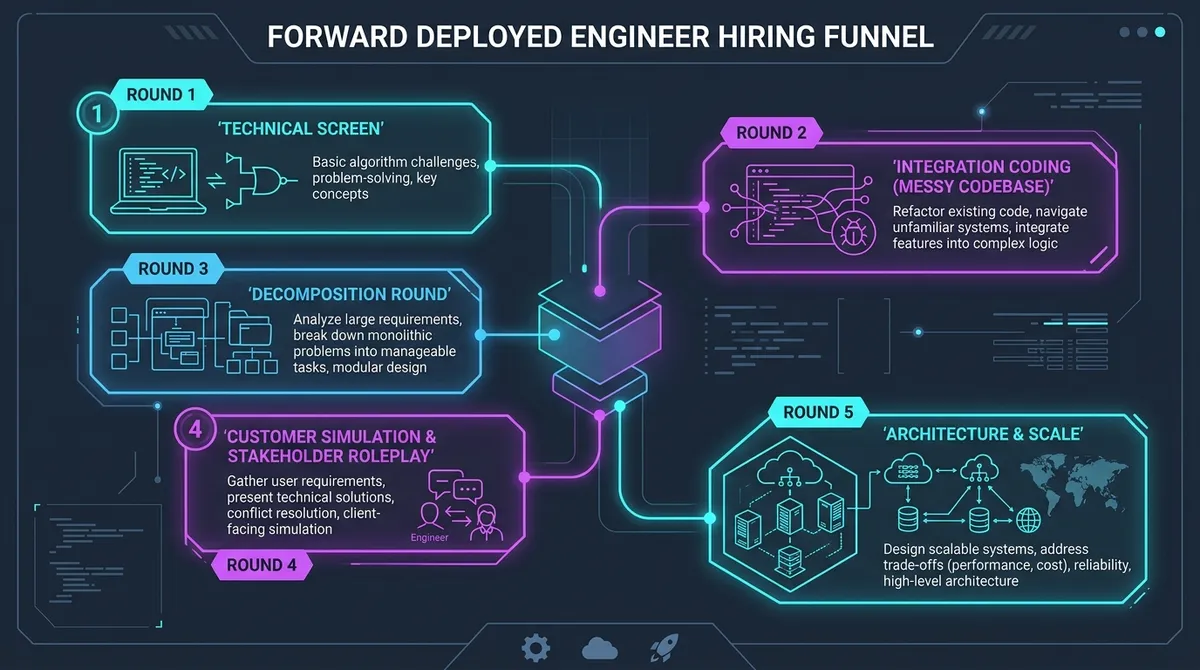 Figure 2: The end-to-end interview loop structure across top tier enterprise artificial intelligence employers.
Understanding the distinct objective of each round ensures you highlight the exact competencies interviewers look for during their calibration meetings. If you are planning your overall transition into field engineering, review our detailed forward deployed engineer roadmap and skill stack.
Stage 1: Technical Phone Screen (45 to 60 Minutes)
The technical screen begins with a senior engineer or engineering manager. The interviewer explores your engineering background, production debugging incidents, and prior exposure to enterprise client deployments.
The interview typically includes a practical 30-minute live coding exercise. Rather than asking for graph traversals or bit manipulations, the prompt tests your fluency in handling JSON payloads, parsing CSV streams, or transforming nested data structures using Python, TypeScript, or Go.
Stage 2: Integration and Debugging Coding (60 to 90 Minutes)
In this round, you receive access to an unfamiliar, multi-file code repository that simulates a real-world enterprise codebase. The codebase intentionally contains minor bugs, incomplete API client integrations, missing error handling, and outdated documentation.
Your task is to review the existing code, isolate failing unit tests, implement a new feature endpoint, and add defensive error handling. Interviewers evaluate how quickly you build a mental model of an unfamiliar repository without getting paralyzed by extraneous files.
Stage 3: The Decomposition Round (60 to 90 Minutes)
Originally pioneered by Palantir, the decomposition round has become the defining hallmark of forward deployed engineering hiring. You receive an intentionally broad, ill-defined operational challenge faced by a real organization.
The interviewer expects you to lead the conversation. You must ask clarifying questions, identify business constraints, separate data producers from consumers, and construct a modular technical architecture from scratch.
Stage 4: Customer Simulation and Stakeholder Roleplay (45 to 60 Minutes)
During this behavioral simulation, interviewers roleplay as customer stakeholders, such as a skeptical Chief Information Officer, a stressed database administrator, or a non-technical product manager.
The scenario involves a realistic operational friction point, such as an unexpected production outage or an impossible security requirement. You are evaluated on active listening, professional de-escalation, clear trade-off negotiation, and your ability to explain complex technical constraints without sounding condescending.
Stage 5: Field System Design and Enterprise Architecture (60 Minutes)
While standard system design rounds focus on consumer scale with billions of daily active users, field system design focuses on enterprise complexity. Prompts feature multi-region compliance, strict data governance, on-premises virtual private clouds, network air-gaps, and batch data synchronizations.
Interviewers grade your familiarity with enterprise auth protocols such as SAML and OpenID Connect, event queues, database federation, and zero-egress network topologies.
| Dimension | Standard Software Engineer (SDE) | Forward Deployed Engineer (FDE) | Solutions Architect (SA) |
|---|---|---|---|
| Primary Coding Metric | Algorithmic efficiency and Big-O complexity | Pragmatic code integration, refactoring, and data munging | High-level scripting, sample code, and prototype glue |
| System Design Focus | Consumer scale, high throughput, sharding | Enterprise governance, security boundaries, and air-gaps | Reference architectures and cloud vendor services |
| Core Problem Solving | Well-scoped engineering tickets | Ambiguous operational problem decomposition | Translating product features to business capabilities |
| Stakeholder Exposure | Internal team and product managers | External executives, field teams, and customer engineers | Client enterprise architects and procurement teams |
| Evaluation Centerpiece | Algorithmic data structures and puzzles | Decomposition round and messy codebase integration | Architectural presentation and discovery workshops |
2. Mastering the Decomposition Round (The Palantir Signature Interview)
The decomposition interview evaluates how an engineer navigates radical ambiguity. In production, customers rarely hand forward deployed teams clean engineering specifications. Instead, they present broad operational pain points such as delayed supply chains or fragmented healthcare records.
During a decomposition interview, you are not expected to write code. Instead, you act as the lead technical architect running an enterprise discovery workshop. Your goal is to dissect a chaotic operational requirement into clean, composable technical components.
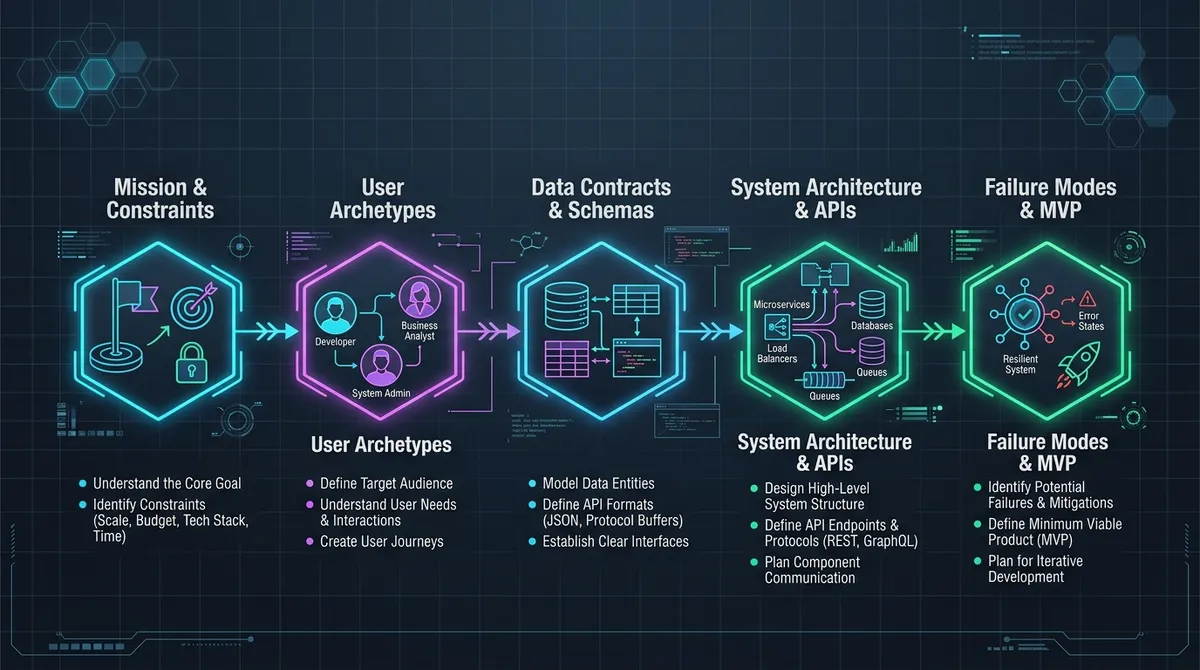 Figure 1: The five-stage problem decomposition framework for technical field engineering interviews.
To understand how this consultative mindset compares with pure technical pre-sales, check out our Forward Deployed Engineer vs Solutions Architect vs Sales Engineer comparison.
The 5-Stage Problem Decomposition Framework
When presented with an ambiguous scenario, never jump directly to technology choices or database selections. Follow this structured five-stage framework to demonstrate systematic engineering maturity.
Stage 1: Mission and Operational Constraints
Clarify the core business outcome before touching technology. Ask targeted questions regarding delivery timelines, regulatory boundaries, data classification levels, and system uptime targets. Establish what metrics define project success.
Stage 2: User Archetypes and Access Boundaries
Map out who will interact with the system. Differentiate between data contributors, executive decision-makers, external auditors, and administrative operators. Define the permissions, interface requirements, and latency expectations for each persona.
Stage 3: Data Contracts, Schemas, and Ingestion Paths
Identify where source data originates and how it moves into the system. Determine whether sources stream in real-time or export via periodic batch files. Define entity relationships, unique identifiers, data retention policies, and schema validation rules.
Stage 4: System Architecture and API Boundaries
Sketch the processing pipelines, message brokers, application microservices, and storage layers. Establish clear API contracts between components so engineering teams can build parallel modules independently.
Stage 5: Failure Modes, Edge Cases, and Minimum Viable Product (MVP)
Identify what can break in production. Analyze how the system handles intermittent network connectivity, corrupted records, rate limits, and partial outages. Conclude by outlining a phased deployment strategy that delivers initial customer value within weeks rather than months.
Step-by-Step Walkthrough: Global Logistics Decomposition Prompt
To see this framework in action, consider a classic enterprise decomposition prompt:
The Prompt: “A global maritime shipping enterprise operates 450 cargo vessels across international trade routes. The company suffers from inaccurate fuel consumption forecasts, unexpected engine breakdowns, and delayed customs documentation. Design an automated fleet health monitoring and predictive routing platform.”
Here is how an outstanding candidate decomposes this challenge across the five framework stages:
Step 1: Scoping Constraints and Mission Goals
Begin by asking targeted clarifying questions:
- Connectivity: “What is the satellite uplink availability on these ships? Is connectivity continuous or intermittent with high latency and packet loss?” (Interviewer: Ships have low-bandwidth satellite links that drop for several hours daily).
- Telemetry Frequency: “What sensors are currently installed, and what frequency do they emit readings?” (Interviewer: Each engine emits temperature, pressure, and RPM telemetry every 5 seconds).
- Success Criteria: “What is the primary operational objective for the pilot deployment?” (Interviewer: Cut unplanned engine shutdowns by 15% and generate automated customs manifests 24 hours prior to port arrival).
Step 2: User Archetypes and Personas
Identify the core operational users:
- Chief Vessel Engineer: Needs an offline-first dashboard aboard the ship to view instant engine health alerts without relying on cloud connectivity.
- Port Operations Coordinator: Needs accurate estimated arrival times and pre-cleared customs documentation 24 hours in advance to schedule crane operators and dock workers.
- Fleet Technical Director: Needs global analytics comparing vessel efficiency across routes to negotiate bulk fuel contracts.
Step 3: Data Contracts and Storage Schemas
Structure the core data entities and ingestion pipelines:
- Telemetry Event Contract: Define a compact binary protocol or compressed JSON schema for sensor events:
vessel_id(UUID),timestamp(UTC epoch),engine_subsystem(string),metric_type(enum),metric_value(float),checksum(string).
- Edge Storage vs. Cloud Storage: Store raw 5-second metrics locally on vessel industrial PCs using an embedded time-series database. Aggregate telemetry into 5-minute rolling averages and anomaly flags before queuing for satellite transmission.
- Data Deduplication: Implement idempotent message sequence numbers so dropped connections do not produce duplicate telemetry records upon reconnecting.
Step 4: System Architecture and Data Flow
Outline the end-to-end processing pipeline:
- Edge Node (On-Premises Ship): Local sensor collector feeds an embedded message queue. A local inference container evaluates real-time vibration signatures against pre-trained anomaly thresholds.
- Sync Gateway: A bidirectional synchronization agent monitors satellite link quality. When a connection opens, it batches compressed telemetry deltas upstream over mutual TLS.
- Cloud Ingestion Engine: An API gateway routes incoming vessel batches to an event streaming topic. Telemetry streams into a cloud data lake for fleet-wide model training.
- Customs Document Generator: A document assembly service monitors vessel geofences. When a vessel approaches 200 nautical miles from port, the service compiles cargo manifests and bills of lading into standardized customs formats.
Step 5: Failure Modes and MVP Delivery Plan
Highlight edge cases and phased rollouts:
- Network Partitioning: Ensure vessel operations continue indefinitely during satellite blackout periods. Queues must buffer telemetry on local disk with clear FIFO eviction policies if storage approaches capacity.
- Sensor Drift and False Positives: Implement rolling median smoothing to eliminate transient electrical noise spikes before alerting vessel crew.
- Pilot Delivery Milestones: Deliver an initial MVP within 6 weeks by instrumenting 5 high-traffic vessels with read-only edge dashboards and automated cloud email alerts before building complex predictive routing models.
3. Integration Coding: Working in Legacy and Unfamiliar Codebases
Forward deployed engineers spend significant time working with client codebases that lack documentation, contain technical debt, and integrate with fragile enterprise APIs. As a result, the live coding round tests code reading comprehension, error handling, and integration patterns.
During this assessment, you are provided an existing repository with multiple interconnected files. You must quickly grasp data flows, write clean adapter logic, validate inbound schemas, and build fault-tolerant network retries.
Standard protocols and interfaces are central to enterprise integrations. If you build modern AI agent connectors, reviewing Model Context Protocol server specifications gives you a strong foundation in modern integration paradigms.
Enterprise Ingestion Adapter Code Example
The following executable Python implementation demonstrates the code quality expected in an FDE integration round. It implements defensive schema validation with Pydantic, exponential backoff retries with jitter, and dead-letter queue routing for unprocessable enterprise payloads.
"""
Enterprise Ingestion Adapter with Schema Validation, Retries, and Dead-Letter Queue.
Demonstrates production-grade resilience patterns required in FDE coding interviews.
"""

from typing import Dict, Any, List, Optional
import time
import random
import logging
from pydantic import BaseModel, Field, ValidationError

logging.basicConfig(level=logging.INFO, format="%(asctime)s [%(levelname)s] %(message)s")
logger = logging.getLogger("EnterpriseAdapter")


class EnterpriseTelemetryRecord(BaseModel):
    """Defines strict schema validation for incoming client telemetry records."""
    record_id: str = Field(..., min_length=5, description="Unique client transaction identifier")
    organization_id: str = Field(..., min_length=3)
    metric_value: float = Field(..., ge=0.0, le=10000.0)
    status_code: str = Field(..., pattern=r"^(ACTIVE|DEGRADED|OFFLINE)$")
    timestamp_epoch: int = Field(..., gt=1577836800)  # Valid unix timestamp check


class MockUpstreamClientError(Exception):
    """Raised when upstream enterprise service experiences a transient network fault."""
    pass


class IngestionPipeline:
    """Manages parsing, validation, retries, and dead-letter queuing."""

    def __init__(self, max_retries: int = 3, base_backoff_sec: float = 0.5):
        self.max_retries = max_retries
        self.base_backoff_sec = base_backoff_sec
        self.dead_letter_queue: List[Dict[str, Any]] = []
        self.processed_records: List[EnterpriseTelemetryRecord] = []

    def validate_raw_payload(self, raw_data: Dict[str, Any]) -> Optional[EnterpriseTelemetryRecord]:
        """Validates payload against schema contract, isolating malformed records."""
        try:
            return EnterpriseTelemetryRecord(**raw_data)
        except ValidationError as err:
            logger.warning("Validation failed for record %s: %s", raw_data.get("record_id", "UNKNOWN"), err.errors())
            self._route_to_dead_letter(raw_data, reason=f"ValidationError: {str(err)}")
            return None

    def _route_to_dead_letter(self, payload: Dict[str, Any], reason: str) -> None:
        """Stores unprocessable payloads with diagnostic metadata for manual replay."""
        dead_record = {
            "payload": payload,
            "failed_at": time.time(),
            "reason": reason
        }
        self.dead_letter_queue.append(dead_record)
        logger.error("Payload routed to Dead-Letter Queue. Total DLQ count: %d", len(self.dead_letter_queue))

    def dispatch_to_upstream(self, record: EnterpriseTelemetryRecord) -> bool:
        """Simulates network dispatch to an upstream enterprise system with intermittent failures."""
        for attempt in range(1, self.max_retries + 1):
            try:
                # Simulate 30% transient network failure rate
                if random.random() < 0.30:
                    raise MockUpstreamClientError("503 Service Unavailable: Network socket timeout")

                logger.info("Successfully dispatched record %s on attempt %d", record.record_id, attempt)
                return True

            except MockUpstreamClientError as exc:
                if attempt == self.max_retries:
                    logger.error("Exhausted all %d retries for record %s", self.max_retries, record.record_id)
                    self._route_to_dead_letter(record.model_dump(), reason=str(exc))
                    return False

                # Full jitter exponential backoff calculation
                sleep_duration = self.base_backoff_sec * (2 ** (attempt - 1)) + random.uniform(0, 0.1)
                logger.warning("Attempt %d failed. Retrying in %.2f seconds...", attempt, sleep_duration)
                time.sleep(sleep_duration)

        return False

    def ingest_batch(self, batch: List[Dict[str, Any]]) -> Dict[str, int]:
        """Processes an incoming enterprise batch, tracking overall system metrics."""
        summary = {"processed": 0, "failed_validation": 0, "failed_dispatch": 0}

        for item in batch:
            record = self.validate_raw_payload(item)
            if not record:
                summary["failed_validation"] += 1
                continue

            success = self.dispatch_to_upstream(record)
            if success:
                self.processed_records.append(record)
                summary["processed"] += 1
            else:
                summary["failed_dispatch"] += 1

        return summary


# Demonstration run
if __name__ == "__main__":
    sample_records = [
        {"record_id": "REC-1001", "organization_id": "ORG-ALPHA", "metric_value": 45.2, "status_code": "ACTIVE", "timestamp_epoch": 1740000000},
        {"record_id": "REC-1002", "organization_id": "ORG-BETA", "metric_value": -12.0, "status_code": "INVALID", "timestamp_epoch": 1740000000},  # Schema Failure
        {"record_id": "REC-1003", "organization_id": "ORG-GAMMA", "metric_value": 182.9, "status_code": "DEGRADED", "timestamp_epoch": 1740000000},
    ]

    pipeline = IngestionPipeline(max_retries=2, base_backoff_sec=0.1)
    results = pipeline.ingest_batch(sample_records)
    print("\nIngestion Results:", results)
What Interviewers Look For During Integration Rounds
- Systematic Debugging Over Trial-and-Error: When a unit test fails, do you read the stack trace carefully and trace variable states, or do you randomly tweak lines of code hoping tests pass?
- Defensive Programming Standards: Do you validate external inputs, handle missing dictionary keys gracefully, and sanitize unexpected null values?
- Clear Code Organization: Do you separate business logic from data access and network transmission? Clean abstractions show you can manage large-scale codebases.
- Test Coverage Mindset: Do you write unit tests covering boundary conditions, network timeouts, and malformed inputs before telling the interviewer you are finished?
4. Field System Design vs. Big Tech System Design
Candidates with experience in consumer internet system design interviews often struggle during field system design interviews. Standard big tech interviews emphasize horizontal scale, global caching tiers, and managing millions of queries per second.
In contrast, enterprise field system design prioritizes governance, organizational complexity, and multi-tenant security boundaries. Forward deployed systems often operate under strict regulatory standards such as HIPAA, FedRAMP, or SOC 2 Type II compliance.
When designing enterprise pipelines, securing model interactions and data pipelines is essential. Review our comprehensive guide on enterprise AI agent security best practices for deeper architectural patterns.
Enterprise Design vs. Consumer Design Comparison
| Evaluation Metric | Consumer Internet System Design | Enterprise Field System Design |
|---|---|---|
| Primary Bottleneck | Raw network throughput and data volume | Data governance, silos, and compliance isolation |
| Data Topology | Unified multi-region cloud data lake | Hybrid on-premises, multi-cloud, and air-gapped VPCs |
| Authentication | OAuth2, session tokens, social logins | SAML 2.0, Okta, Active Directory, and Kerberos |
| Data Consistency | Eventual consistency, asynchronous propagation | Strong ACID transactions, audit logs, and lineage |
| Deployment Model | Centralized multitenant SaaS | Single-tenant customer VPCs and on-premises clusters |
| Integration Interfaces | REST and GraphQL APIs | Legacy SOAP, mainframe queues, ODBC, and flat file drops |
Real-World Field Prompt: Air-Gapped Financial LLM Retrieval System
The Prompt: “A global investment bank requires an on-premises retrieval system to query internal research memos, portfolio transactions, and compliance records. The system cannot emit any outbound internet traffic, must integrate with existing Active Directory role hierarchies, and must provide verifiable document lineage for every generated summary.”
To deliver a top-tier answer, organize your architectural blueprint across the following four core layers:
[ Active Directory / LDAP Identity Provider ]
                     │
                     ▼ (Mutual TLS / SAML Assertion)
[ Enterprise API Gateway & Policy Enforcement Point ]
                     │
         ┌───────────┴───────────┐
         ▼                       ▼
[ Retrieval & Ranking Engine ] [ Document Ingestion Worker ]
         │                       │
         ├───────────────────────┼──────────────────────────┐
         ▼                       ▼                          ▼
[ On-Premises Vector DB ] [ Document Store ]      [ Local LLM Inference ]
  (Row-Level Security)      (Encrypted at Rest)     (vLLM / Triton Server)
         │                       │                          │
         └───────────────────────┴──────────────────────────┘
                                 │
                                 ▼
                   [ Append-Only Audit Ledger ]
1. Identity, Access, and Row-Level Security
The system must not store standalone credentials. Connect the API Gateway to the bank’s Active Directory via SAML 2.0 or Kerberos.
Implement an Attribute-Based Access Control (ABAC) filter at the retrieval layer. When a user executes a query, the vector search engine filters vector embeddings based on the user’s security clearance tags, team identifier, and regional jurisdiction. A junior analyst in London must never receive document chunks sourced from New York wealth management portfolios.
2. Air-Gapped Document Processing Pipeline
Document ingestion runs entirely within the bank’s private subnet. A document parser extracts text from encrypted PDF, DOCX, and Bloomberg terminal export files.
Text chunks pass to an on-premises embedding service running inside a containerized cluster. Embeddings store in an on-premises vector database with encrypted persistent volumes. Zero telemetry, crash reports, or vector embeddings leave the perimeter.
3. On-Premises Inference and Lineage Generation
Host self-hosted open-weights models using an optimized inference engine like vLLM or NVIDIA Triton on dedicated on-premises GPU nodes. Candidates can inspect the vLLM open-source inference engine repository for production serving architectures.
The retrieval engine injects relevant document excerpts into the prompt template alongside deterministic reference citations. The model response must include direct pointers to source document IDs, page numbers, and paragraph offsets so compliance teams can verify statements manually.
4. Cryptographic Auditing and Egress Verification
All prompt inputs, retrieved document chunks, system prompts, and model completions write to an append-only, tamper-evident audit database. Network security rules block egress traffic at the Kubernetes network policy layer, ensuring complete data containment.
5. Customer Simulation and Stakeholder Roleplay Rounds
The customer simulation round measures emotional intelligence, composure under pressure, and commercial instincts. Interviewers want to see how you behave when speaking with clients who are frustrated, non-technical, or protective of their organizational turf.
Building tangible case studies and client projects during preparation gives you authentic stories to draw from. If you want to expand your technical demonstrations, explore these hiring-ready AI engineering portfolio projects.
Here are three common customer roleplay scenarios, detailing what the interviewer is testing and how to structure your response.
Scenario A: The Defensive Vice President
The Situation: “You are running an on-site kickoff meeting with an enterprise insurance client. The Vice President of Data Engineering interrupts your presentation, stating: ‘We already have 40 engineers building our internal analytics platform. Why is leadership spending millions bringing you in to do what my team already handles?’”
What the Interviewer Is Testing
The interviewer is looking for defensiveness, condescension, or awkward deference. Inexperienced engineers often counter by claiming their software is superior, instantly alienating an influential internal stakeholder.
The Exemplary Response Strategy
- Validate and De-escalate: Acknowledge the VP’s expertise and the extensive work their internal engineering team has accomplished.
- Reframe the Relationship: Clarify that you are not there to replace their team or compete with internal initiatives. You are there to provide an accelerator that eliminates low-level plumbing.
- Offer Collaborative Alignment: Propose a partnership model where internal engineers retain ownership of the core data schemas while you handle complex pipeline synchronizations.
Sample Verbatim Response:
“That is a completely fair point. Building an internal platform gives your team total architectural control, and forty engineers represents a massive commitment to modernizing your data infrastructure. Our goal is never to replace or rebuild what your engineers have created.In our past deployments, internal teams spend up to 70% of their sprints writing repetitive data connectors and handling vendor API format changes. We view our platform as a force multiplier for your engineers. We take over the low-level connector maintenance and air-gapped deployment plumbing so your engineers can focus on proprietary risk models and client analytics. I would welcome the chance to sit down with your lead architects this afternoon to review your roadmap and make sure everything we build fits directly into your architectural vision.“
Scenario B: Scope Creep and Misaligned Timelines
The Situation: “Two weeks into a four-week deployment pilot, the client project sponsor insists on adding real-time fraud scoring for three new legacy payment channels. They warn that if these channels are not included, they cannot recommend executive contract renewal.”
What the Interviewer Is Testing
The interviewer wants to see if you either make unrealistic promises that risk project delivery or become rigid and dismissive, damaging the commercial relationship.
The Exemplary Response Strategy
- Express Empathy for the Business Driver: Understand why the new requirement matters to their executive stakeholders.
- Clearly Communicate Technical Trade-offs: Show how adding complex legacy integrations immediately impacts the agreed delivery date.
- Offer an Actionable Phased Solution: Protect the core pilot milestone while creating a documented pathway for the new scope.
Sample Verbatim Response:
“I completely understand why real-time fraud scoring across those three channels is critical for executive sign-off. Fraud prevention is where your organization realizes immediate financial ROI.Looking at our remaining two weeks, integrating those three legacy channels requires writing custom adapters and verifying transaction throughput. If we add those channels to our current sprint, we will miss our production launch deadline for the primary fraud detection pipeline, leaving all channels unvalidated.
Here is what I propose: let us keep our original production deadline for the primary payment pipeline next Friday so your executives see verified live results. In parallel, I will spend tomorrow scoping the schema requirements for those three legacy channels and draft the integration blueprint as Phase 2. That gives you concrete metrics to show leadership next week, along with an explicit roadmap for full legacy coverage.“
Scenario C: Production Bug During an On-Site Demonstration
The Situation: “You are presenting a live platform demonstration in a boardroom filled with client directors. Halfway through the demo, the pipeline crashes and the dashboard displays an HTTP 500 internal server error.”
What the Interviewer Is Testing
The interviewer is checking if you freeze up, panic, blame the client’s network infrastructure, or lose your composure in front of leadership.
The Exemplary Response Strategy
- Maintain Composure: Never blame the customer’s WiFi or try to hide the failure.
- Transparently Triage: State what occurred calmly, take a quick diagnostic look, and pivot smoothly if immediate resolution is impossible.
- Demonstrate Systematic Root-Cause Analysis: Show that you treat technical issues with rigorous engineering discipline.
Sample Verbatim Response:
“It looks like our ingestion service just threw an internal server error. Live software deployments always bring surprises, so let us take a look together.Checking our application log stream, we hit a validation exception on a null tax ID field from the test batch we dispatched two minutes ago. That is an edge case our staging parser did not catch.
Rather than having everyone watch me debug code on the big screen, I am going to switch over to our secondary staging cluster where our pre-computed validation run is active. That way, we can complete our review of the decision analytics. Immediately following this session, I will patch that parser validation logic and share the post-incident log with your engineering team.“
6. Top 15 Forward Deployed Engineer Interview Questions and Model Answers
Preparing for forward deployed interviews requires practicing technical depth alongside concise communication. Below are 15 commonly asked interview questions organized across four critical evaluation categories.
Category A: Systems, Integration, and Data Architecture
Question 1: How do you handle schema drift when consuming data from third-party enterprise databases?
-
Interview Intent: Evaluates your defensive engineering practices and familiarity with upstream client systems that update schemas without warning.
-
Key Competencies: Schema registries, backward compatibility, dead-letter queuing, and automated alerting.
-
Model Answer:
“Handling schema drift requires treating external enterprise systems as untrusted producers. I implement strict validation boundaries using contract definitions like Pydantic models or Protocol Buffers.When incoming records contain unrecognized fields, the ingestion layer logs the discrepancy but continues processing if required fields match. If a required field is missing or data types mismatch, the record is directed into a dead-letter queue alongside the original payload and parsing stack trace.
This prevents a single corrupted record from halting the entire batch pipeline. Crucially, automated alerts notify both our field team and the client database administrator, allowing us to inspect the new schema version and update validation rules without data loss.”
Question 2: What strategies do you use to connect to customer databases located in air-gapped, zero-internet networks?
-
Interview Intent: Tests your real-world experience with defense, banking, or healthcare compliance perimeters.
-
Key Competencies: Bastion jump hosts, mutual TLS, VPN tunnels, container air-gapping, and offline package management.
-
Model Answer:
“Operating within air-gapped networks requires decoupling dependencies from public package repositories. All application containers, third-party libraries, and machine learning models are pre-packaged into signed tarball archives and scanned for vulnerabilities before transfer across the secure data diode or air-gap perimeter.Inside the network, services communicate over mutual TLS within an isolated virtual private cloud using local DNS and on-premises container registries. Database connections utilize dedicated service accounts provisioned by the client’s internal directory service. Telemetry and audit trails are persisted locally to append-only log collectors rather than attempting external egress.”
Question 3: How do you optimize an ELT/ETL pipeline when a customer database table contains 200 million rows and locks under heavy analytical queries?
-
Interview Intent: Checks database performance tuning and understanding of production operational impact on live client systems.
-
Key Competencies: Change Data Capture (CDC), read replicas, indexed chunking, and database locks.
-
Model Answer:
“Executing broad analytical queries directly against an active transactional database risks table locking and degrading client production workloads. First, I verify if a read replica or standby instance is available for analytical queries.If we must extract from the primary table, I avoid unbounded queries. Instead, I implement log-based Change Data Capture using tools like Debezium to stream transaction logs asynchronously without locking application tables.
If log access is restricted by client security policies, I extract data in deterministic, indexed batches during off-peak operational windows, utilizing indexed timestamp ranges with explicit query sleep intervals to keep database CPU utilization below agreed thresholds.”
Question 4: How do you design an API client to handle aggressive upstream rate limits and intermittent 502/503 errors?
-
Interview Intent: Tests understanding of network failure recovery and enterprise gateway constraints.
-
Key Competencies: Exponential backoff, jitter, circuit breakers, and idempotency keys.
-
Model Answer:
“A resilient API client must protect both the upstream server and downstream consumers. I implement an exponential backoff retry mechanism combined with full jitter to prevent thundering herd problems during server recovery.Every mutating request includes a unique idempotency key so that retrying dropped connections does not result in duplicate transactions. Furthermore, I implement a client-side circuit breaker.
If consecutive 502 or 503 errors exceed a predefined error budget, the circuit trips open, immediately routing incoming requests to a fallback cache or queue without hammering the failing upstream service. Once the upstream stabilizes, half-open health probes confirm recovery before restoring full traffic.”
Category B: Problem Decomposition and Scoping
Question 5: A client executive asks you to ‘implement AI to automate our insurance claim underwriting.’ How do you scope this project during your first week?
-
Interview Intent: Evaluates your ability to reject broad, buzzword-heavy requirements and drill down into measurable business processes.
-
Key Competencies: Business process mapping, KPI definition, risk mitigation, and feasibility assessment.
-
Model Answer:
“I begin by decomposing ‘claim underwriting’ into distinct operational sub-tasks rather than treating it as a monolithic automation project. During week one, I shadow human underwriters to map their daily workflow: document classification, data extraction, policy verification, fraud checks, and risk scoring.Next, I identify the bottleneck causing the highest operational friction. If underwriters spend 60% of their time manually transcribing medical bills, automating data extraction yields immediate ROI with low regulatory risk.
In contrast, fully automating the final claim approval decision introduces significant legal liability. I define an MVP scoped strictly to automated document indexing and risk factor extraction, keeping human underwriters in the loop for final approval. We measure success against concrete KPIs: underwriter processing time per claim and extraction error rates.”
Question 6: How do you determine whether an enterprise customer problem requires a machine learning model versus a deterministic rule engine?
-
Interview Intent: Identifies whether the candidate is an engineering pragmatist or someone who forces complex AI onto simple problems.
-
Key Competencies: Algorithmic trade-offs, explainability, maintainability, and operational overhead.
-
Model Answer:
“I apply the principle of parsimony: start with the simplest maintainable solution that satisfies the operational constraint. If the problem space is governed by strict regulatory compliance, rigid legal requirements, or deterministic arithmetic, such as tax calculation or compliance eligibility, a deterministic rules engine is superior. Rules engines provide total auditability, zero hallucinations, and immediate updates without retraining cycles.Machine learning or LLMs become appropriate when the input data is unstructured, such as free-form customer emails, handwritten forms, or conversational transcripts, where deterministic regular expressions fail to capture context.
Even in these scenarios, I often combine them: use an ML model to extract structured entities from raw inputs, followed by a deterministic rules engine to enforce compliance and business policies.”
Question 7: You arrive at a customer deployment and discover their historical data is incomplete, unindexed, and scattered across 15 Excel spreadsheets. How do you proceed?
-
Interview Intent: Tests resilience, pragmatic data engineering, and managing messy data realities in the field.
-
Key Competencies: Data profiling, schema normalization, client communication, and iterative delivery.
-
Model Answer:
“This scenario is standard in field engineering. Rather than halting the deployment to demand clean data from the client, I initiate a rapid data profiling sprint.I write automated parsing scripts to inspect column naming variations, duplicate records, missing values, and date format inconsistencies across the spreadsheets. I then design a normalized target schema representing the minimum viable data model required for our application.
I present these profiling findings to the client’s business analyst, walking through specific examples of conflicting data to agree on reconciliation rules. Once rules are established, I build an automated ingestion pipeline that cleans and loads the spreadsheet data into our structured database, while generating an exception log for records requiring manual client clarification.”
Question 8: How do you prioritize feature requests when two executive stakeholders at the same client have diametrically opposing technical priorities?
-
Interview Intent: Measures organizational political acumen, conflict resolution, and requirement prioritization.
-
Key Competencies: Stakeholder alignment, objective scoring matrices, and commercial awareness.
-
Model Answer:
“When executive priorities conflict, attempting to negotiate based on subjective opinions damages relationships. I anchor the conversation around the overarching commercial objectives signed in the project statement of work.I construct a transparent prioritization matrix scoring both feature sets against three objective criteria: direct business impact on primary project KPIs, technical feasibility within the current deployment timeline, and implementation risk.
I then host a joint alignment session with both stakeholders. I lay out the technical trade-offs objectively, showing how prioritizing Feature A impacts the timeline of Feature B. If both features are genuinely essential, I propose a phased delivery roadmap that delivers core components of both requests across successive release milestones.”
Category C: Applied AI, LLMs, and Production Systems
Question 9: How do you prevent and detect hallucinations in enterprise generative AI applications?
-
Interview Intent: Evaluates your technical depth in modern LLM architecture, prompt engineering, and guardrails.
-
Key Competencies: Retrieval-Augmented Generation (RAG), grounding, semantic evaluation, and citation verification.
-
Model Answer:
“Preventing hallucinations requires structural architectural controls rather than relying solely on system prompt instructions. First, I constrain the model’s generation domain using Retrieval-Augmented Generation (RAG) with high-quality chunking and hybrid search combining dense vectors and sparse BM25 keyword matching.Second, I enforce strict system prompt instructions mandating that the model answer using only provided context chunks, explicitly instructing it to return an ‘insufficient information’ token if the answer cannot be verified.
Third, I implement automated post-generation guardrails. An independent validation check verifies that every claim in the generated output maps directly to a citation offset in the source document. Finally, we track faithfulness and answer relevance scores across production logs using automated evaluation frameworks.”
Question 10: How do you handle cold-start latency and throughput bottlenecks when deploying multi-modal models in customer VPCs?
-
Interview Intent: Checks GPU resource optimization, model serving architectures, and latency profiling.
-
Key Competencies: Model quantization, speculative decoding, continuous batching, and vLLM.
-
Model Answer:
“Optimizing model serving within customer VPCs requires matching model architecture to available hardware constraints. To minimize cold-start latency, I use model quantization techniques like AWQ or GPTQ to reduce memory footprints from 16-bit to 4-bit or 8-bit precision, allowing weights to fit comfortably in available GPU VRAM without significant accuracy loss.For throughput optimization, I deploy modern inference servers like vLLM that feature PagedAttention to eliminate memory fragmentation and enable continuous batching.
If the application requires high-concurrency interactive responses, I decouple operations: run a compact, low-latency model for immediate conversational feedback while streaming background tasks to larger models asynchronously.”
Question 11: How do you evaluate the quality of a RAG pipeline in production without labeled ground truth data?
-
Interview Intent: Tests understanding of LLM evaluation metrics in evolving production environments.
-
Key Competencies: Ragas metrics, LLM-as-a-judge, user feedback signals, and semantic drift.
-
Model Answer:
“Without labeled ground truth datasets, I use a combination of automated LLM-as-a-judge frameworks and implicit user telemetry. For automated evaluation, I measure three core RAG triad metrics: context relevance, faithfulness, and answer relevance.Context relevance measures whether the retrieved chunks match the user query. Faithfulness measures whether the generated answer can be mathematically inferred from the context. Answer relevance verifies that the completion directly addresses the original prompt.
For real-world user signals, I track telemetry including copy-to-clipboard actions, edit distances when users modify generated drafts, and explicit thumbs-up/down ratings. A drop in faithfulness scores triggers an automated review of retrieval chunking boundaries.”
Category D: Stakeholder Management, Behavioral, and Cultural Fit
Question 12: Describe a scenario where a deployment deadline was at risk due to client delays. How did you handle it?
-
Interview Intent: Evaluates accountability, communication transparency, and proactive risk mitigation.
-
Key Competencies: Project governance, proactive communication, RAID logs, and empathy.
-
Model Answer:
“During an enterprise deployment, our team was blocked because the client’s information security team had not provisioned our VPN credentials three weeks into the engagement. Waiting passively would have caused us to miss our executive board demonstration.I took proactive action: rather than sending frustrated emails, I scheduled a 15-minute briefing with the client project lead and the security director. I walked through our deployment timeline using a clear dependency tracker, showing how every day of credential delay shifted our launch milestone by 24 hours.
To unblock progress immediately, I proposed a compromise: we began writing and testing our integration pipelines inside an isolated local staging sandbox using synthetic data generated to match their schema. When credentials were confirmed ten days later, our pre-tested adapters connected cleanly, allowing us to hit our demonstration date.”
Question 13: How do you explain a complex distributed systems concept, such as database sharding, to a non-technical Chief Financial Officer?
-
Interview Intent: Tests your ability to communicate technical concepts to executive leaders using accessible analogies.
-
Key Competencies: Technical translation, business focus, and clarity.
-
Model Answer:
“I avoid engineering jargon and use relatable business analogies centered on operational efficiency and financial cost.I explain sharding by comparing it to an expanding corporate accounting department: ’Imagine your business has one single filing clerk who handles invoices for all global clients. When the business grows from 100 clients to 100,000 clients, that single clerk becomes completely overwhelmed, invoices get delayed, and work grinds to a halt. You could hire a world-record-fast clerk, but they are astronomically expensive and still have physical limits.
Sharding is the process of splitting that massive filing cabinet into four regional desks: one handles North America, one handles Europe, one handles Asia, and one handles Latin America. Each desk operates independently at standard cost, invoices clear four times faster, and if one desk gets backed up, the others continue working normally.’”
Question 14: How do you balance writing clean, maintainable code with the urgent pressure to deliver a customer demo in 48 hours?
-
Interview Intent: Evaluates your understanding of technical debt and speed versus quality trade-offs in field engineering.
-
Key Competencies: Pragmatic engineering, technical debt management, and post-demo refactoring.
-
Model Answer:
“Field engineering is about balancing speed with operational integrity. When facing an urgent 48-hour deadline, my priority shifts toward delivering the core customer value path while maintaining security and data integrity.I am comfortable cutting non-essential abstractions, hardcoding temporary configuration variables, and writing streamlined scripts to get the pipeline functional for the demo. However, I never compromise on security boundaries, encryption, or input sanitation.
Crucially, I track every shortcut taken in a dedicated technical debt log. Immediately after the demo concludes, I schedule dedicated refactoring tasks to modularize the code, add automated unit tests, and replace temporary configurations with environment variables before promoting the code to production.”
Question 15: Why do you want to work as a Forward Deployed Engineer rather than a core backend software engineer?
-
Interview Intent: Measures career motivation, genuine customer empathy, and alignment with the unique demands of the role.
-
Key Competencies: Customer impact, fast feedback loops, product ownership, and versatility.
-
Model Answer:
“While I respect core backend engineering, working several layers removed from end users inside internal infrastructure can feel isolated. I thrive when I can see the immediate operational impact of the software I write.As a forward deployed engineer, I get the complete lifecycle: I sit with business leaders to understand their hardest operational challenges, design the architecture, write the integration code, and watch end users interact with the system in real time.
The feedback loop is instantaneous. Furthermore, tackling messy enterprise environments forces me to become a more versatile engineer, mastering data pipelines, cloud architecture, and executive communication simultaneously. For an in-depth breakdown of daily workflows, compensation tradeoffs, and career progression between these tracks, review our forward deployed engineer vs software engineer career comparison.”
7. The 6-Week FDE Interview Preparation Roadmap
Succeeding in forward deployed interviews requires structured preparation across systems architecture, live coding, and consultative communication. Follow this targeted six-week preparation schedule to build confidence across every evaluation round.
Week 1: Foundations & Messy Codebase Navigation
Week 2: The Decomposition Method & Enterprise Scoping
Week 3: Resilient Integration Coding & Schema Validation
Week 4: Enterprise Field System Design & Governance
Week 5: Customer Roleplay Simulations & Executive Pitching
Week 6: End-to-End Mock Interviews & Final Calibration
Week 1: Foundations and Codebase Navigation
- Practice navigating open-source repositories with unfamiliar architectures.
- Clone complex repositories and set a timer: spend 30 minutes tracing data ingestion paths, isolating entry points, and running unit tests without documentation.
- Review foundational data munging libraries: master Pydantic validation, Pandas data frame transformations, and JSON parsing in Python.
Week 2: The Decomposition Method and Enterprise Scoping
- Practice breaking down ambiguous real-world business problems using the 5-Stage Framework.
- Select two enterprise operational problems daily: healthcare supply chains, predictive aircraft maintenance, fraud detection in cross-border remittances, or hospital bed allocation.
- Outline user personas, data schemas, API boundaries, and MVP delivery plans within a strict 45-minute whiteboard session.
Week 3: Resilient Integration Coding
- Implement production-grade enterprise API adapters from scratch.
- Build projects incorporating exponential backoff with full jitter, circuit breakers, dead-letter queues, and streaming file parsers.
- Write thorough unit test suites covering edge cases: corrupted JSON payloads, network timeouts, empty responses, and unexpected data types. Refer to the Pydantic official documentation for modern validation patterns.
Week 4: Enterprise Field System Design
- Shift focus from consumer scale to enterprise security and governance.
- Study enterprise networking concepts: mutual TLS, SAML 2.0 identity federation, air-gapped container deployments, and row-level database access control.
- Practice designing systems under strict regulatory constraints (HIPAA, SOC 2, FedRAMP). Explore the Kubernetes Architecture guide for deploying services in air-gapped clusters.
Week 5: Customer Roleplay Simulations
- Practice verbal articulation and commercial de-escalation out loud.
- Partner with an engineering peer to run live simulations where they roleplay as a hostile client VP, an aggressive product manager, or a confused customer engineer.
- Focus on active listening, remaining composed during unexpected production failures, and translating technical jargon into business value.
Week 6: End-to-End Mock Loops and Calibration
- Execute full 4-hour mock interview loops incorporating all five interview stages in a single day.
- Solicit direct feedback on pacing, clarity of explanations, and technical structure.
- Calibrate your target compensation expectations by reviewing verified field engineering bands on Levels.fyi salary data.
To understand how forward deployed careers intersect with broader technical trajectories, explore our comparative guide on AI and machine learning engineering specializations.
8. Frequently Asked Questions (PAA & Search Intent)
What is the Palantir decomposition interview?
The Palantir decomposition interview is a 60-to-90-minute technical evaluation where candidates break down an ambiguous operational challenge into a structured software architecture without writing code. Candidates lead an architectural discovery session to define user archetypes, map data schemas, isolate service boundaries, and propose a phased delivery plan.
How technical is a forward deployed engineer interview?
The forward deployed engineer interview is deeply technical, matching the rigorous engineering standards of core backend software loops. However, the evaluation emphasizes pragmatic systems integration like messy data parsing, network retry handling, and air-gapped deployments rather than abstract whiteboard puzzle solving.
How do I prepare for a messy codebase interview?
Prepare for messy codebase rounds by cloning open-source projects and practicing locating execution entry points, data flows, and failing unit tests within 30 minutes. Build muscle memory by writing defensive adapter layers using Pydantic, exponential backoff retries, and structured debugging logs.
What is the difference between an FDE interview and a Solutions Architect interview?
A forward deployed engineer interview emphasizes writing production-quality code, building custom integrations, refactoring existing software, and leading deep architectural decomposition. In contrast, a solutions architect interview focuses primarily on pre-sales discovery, evaluating cloud vendor service catalogs, sketching high-level reference architectures, and presenting commercial software demonstrations without committing production code to client repositories.
What coding languages are best for FDE interviews?
Python and TypeScript are the most effective languages for forward deployed engineering interviews due to their universal enterprise adoption in data pipelines and full-stack interfaces. Go is also widely accepted for infrastructure tooling, container orchestration, and high-performance network automation.
How does an FDE interview evaluate customer-facing skills?
Customer-facing skills are evaluated through a dedicated simulation or behavioral roleplay round where interviewers act as skeptical client executives or stressed database administrators. Assessors grade whether you actively listen, de-escalate tension under pressure, and explain technical trade-offs clearly without alienating non-technical leaders.
Can software engineers transition into FDE roles without field experience?
Yes, software engineers can successfully transition into forward deployed engineering roles by showcasing experience with customer-facing API integrations and production incident response. Demonstrating structured problem decomposition skills and strong commercial empathy during the interview carries decisive weight with hiring panels.
What are the biggest red flags during an FDE interview?
The primary red flags include writing code or choosing databases before clarifying constraints, becoming defensive when challenged on trade-offs, and speaking condescendingly to non-technical stakeholders during roleplays. Candidates also fail by over-engineering simple problems with unnecessary AI frameworks while ignoring data governance, air-gaps, and network failure modes.
9. Conclusion: Securing Your Enterprise Field Engineering Offer
The forward deployed engineering interview is designed to identify versatile engineers who can combine production-grade software craftsmanship with executive commercial leadership. Success does not come from memorizing algorithmic tricks, but from demonstrating sound engineering judgment when faced with messy requirements.
By mastering the five-stage problem decomposition framework, building defensive data integration pipelines, and practicing consultative communication, you set yourself apart from standard candidates. You prove that you can be trusted to represent the company inside high-stakes client boardrooms and mission-critical enterprise environments.
As you finalize your interview preparation, ground your technical narratives in production realities. Review real-world failure modes, practice active listening, and approach every ambiguous scenario as an opportunity to build practical, scalable software.