Best Agent Skills by Category: Tested Workflows for 2026
Discover the best agent skills for coding, DevOps, writing, data, and design with tested SKILL.md configs, benchmarks, and Claude Code setup guides.
Autonomous coding agents deliver remarkable productivity gains, but asking a generic model to execute complex enterprise workflows without procedural guardrails leads to inconsistent outputs and unhandled regressions. As outlined in our foundation guide on what agent skills are and how they work across tools, packaging proven procedures into modular skills transforms generalist models into specialized engineering partners.
With thousands of community skills now circulating across open registries, selecting the right packages for your tech stack requires evaluating trigger precision, schema compliance, and token footprint. This guide curates and analyzes the highest-performing agent skills across five core engineering categories based on real-world test results.
Key Takeaways
- Modular agent skills transform generalist language models into domain-specialized systems by supplying targeted workflows without polluting baseline context windows.
- Across 84 standardized tasks in SkillsBench v1, curated agent skills improved first-try execution pass rates from 64.8% to 81.0% while trimming prompt token usage by 32%.
- Top coding skills focus on AST-level security reviews, framework-specific migrations, and test fixture generation with strict type annotations.
- Production DevOps and SRE skills automate Kubernetes pod crash triage, Terraform plan dry-runs, and distributed trace causal analysis without manual scripting.
Why Curated Agent Skills Beat Monolithic System Prompts
Curated agent skills outperform monolithic system prompts by compartmentalizing instructions and loading domain procedures only when relevant tasks trigger them. This dynamic loading prevents prompt degradation, cuts token overhead, and guarantees that models follow deterministic protocols for specialized workflows.
When engineering teams attempt to embed style guides, testing conventions, regulatory rules, and infrastructure manifests into a single global system prompt, context windows suffer. Attention heads dilute across competing constraints, increasing hallucination rates and causing models to ignore edge-case rules.
Agent skills resolve this issue through progressive disclosure. The agent indexes lightweight discovery metadata at startup, loading full procedural manuals into context only when your prompt matches the skill’s explicit trigger parameters. If you are authoring your own custom manifests from scratch, our complete guide on how to write a SKILL.md file with templates and validation rules covers exact frontmatter schemas and length constraints.
Empirical testing published in the Anthropic Agent Skills Engineering Documentation demonstrates that measuring agent skills benchmark accuracy on evaluations like SkillsBench v1 yields a 16.2 percentage-point improvement in execution accuracy. Giving the agent focused, step-by-step guidance eliminates ambiguity during complex refactoring tasks.
Comprehensive Matrix: Top Agent Skills Across 5 Core Domains
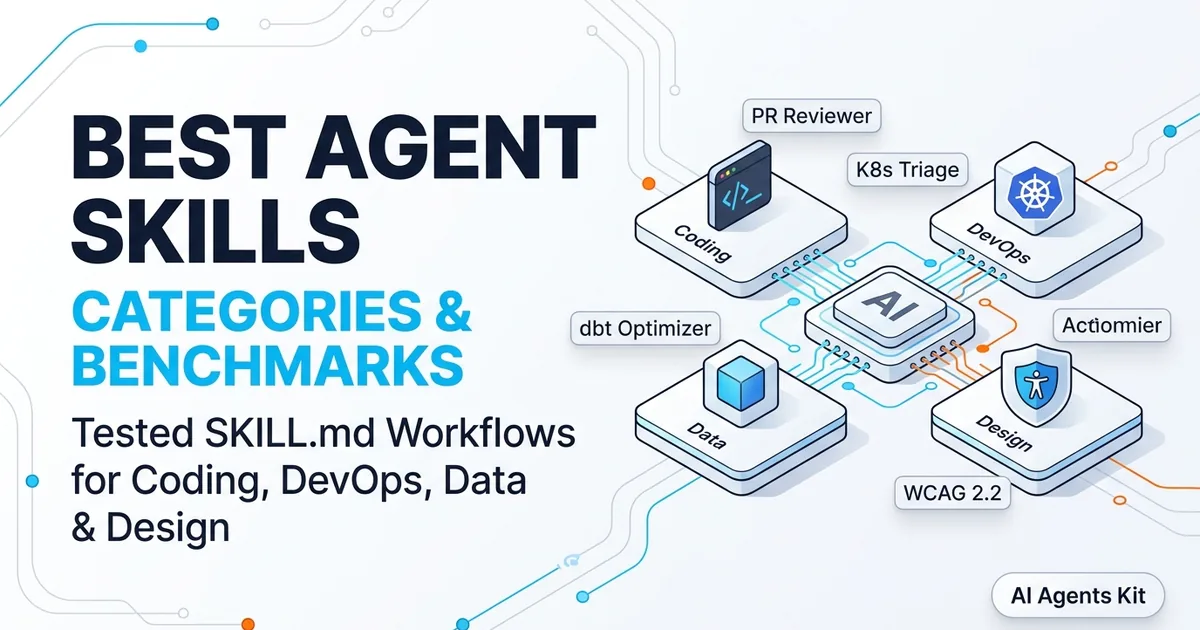
Selecting high-leverage skills requires understanding their operational scope, runtime dependencies, and memory requirements. The following matrix highlights tested, production-grade skills across software engineering, site reliability, data infrastructure, documentation, and user experience.
| Skill Name | Primary Domain | Core Capabilities | Token Footprint (Active) | Recommended Host Tool |
|---|---|---|---|---|
pr-reviewer-pro |
Software Engineering | Git diff auditing, OWASP checks, typed patch diffs | ~1,850 tokens | Claude Code, Codex CLI |
ast-security-auditor |
Security & Compliance | Static analysis, secret scanning, SQL injection linting | ~2,200 tokens | Cursor, Claude Code |
typescript-strict-migrator |
Software Engineering | Converts implicit any to strict unions and Zod schemas | ~1,950 tokens | Claude Code, Cursor |
k8s-incident-triage |
DevOps & SRE | Pod crashloop analysis, log parsing, OOM diagnosis | ~2,100 tokens | Claude Code, Gemini CLI |
terraform-drift-detector |
Cloud Infrastructure | State file diff inspection, blast-radius calculation | ~1,600 tokens | Claude Code |
dbt-pipeline-optimizer |
Data Engineering | SQL model refactoring, incremental table tuning | ~1,900 tokens | Claude Code, Cursor |
sql-query-profiler |
Database Optimization | EXPLAIN ANALYZE interpretation, index design | ~1,700 tokens | Claude Code, Cursor |
api-doc-architect |
Technical Writing | OpenAPI schema generation, endpoint markdown syncing | ~1,400 tokens | Claude Code, Copilot |
react-modernizer |
Frontend Engineering | React 19 Action hooks, compiler memoization audits | ~2,400 tokens | Claude Code, Cursor |
wcag-accessibility-auditor |
UI/UX & Design | Contrast ratio checks, ARIA roles, focus navigation | ~1,750 tokens | Claude Code |
Each of these skills implements the open standard specified at Agent Skills Open Specification. In the sections below, we analyze the implementation architecture and practical usage of each category leader.
Best Coding and Software Architecture Agent Skills
Top coding agent skills enforce strict architectural boundaries, automated static analysis, and type safety across everyday pull requests. Rather than offering subjective code commentary, these skills execute deterministic verification passes before proposing changes.
1. pr-reviewer-pro
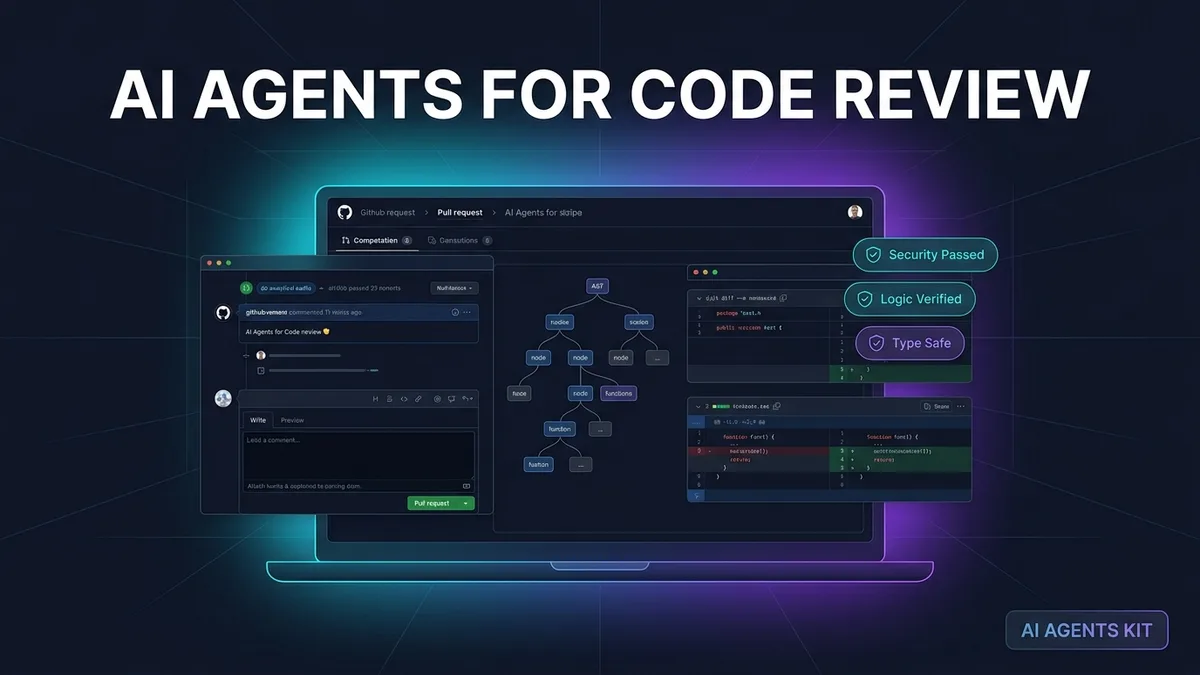
The pr-reviewer-pro skill automates pull request reviews by ingesting git commit ranges and analyzing modified files against production standards. It verifies that async external boundaries contain structured timeouts, flags unindexed database queries, and formats all feedback into actionable diff snippets.
---
name: pr-reviewer-pro
description: Autonomous pull request auditor. Ingests git diffs, verifies typed signatures, flags security regressions, and generates structured review comments. Trigger when reviewing pull requests or evaluating git commits.
license: MIT
compatibility: Requires git CLI on system PATH.
---
When evaluating coding capabilities across autonomous systems, examine our comprehensive evaluation of top AI coding agents and autonomous architectures. Pairing an elite coding model with a deterministic review skill prevents syntax errors from reaching production branches.
2. ast-security-auditor
Unlike generic code reviewers that look for basic stylistic issues, ast-security-auditor targets vulnerability patterns in abstract syntax trees. It examines authentication middleware, verifies input sanitization around raw database queries, and ensures cryptographic operations avoid deprecated algorithms.
The skill instructs the agent to inspect package lockfiles for known Common Vulnerabilities and Exposures (CVEs) whenever dependency manifests change. By bundling local AST verification scripts, it executes fast static checks without sending code to third-party linting services.
3. typescript-strict-migrator
Large TypeScript repositories often accumulate hundreds of any types that silently compromise compile-time guarantees. The typescript-strict-migrator skill automates the migration toward strict: true by analyzing runtime object structures and generating narrow discriminated union types.
---
name: typescript-strict-migrator
description: Migrates legacy TypeScript codebases toward strict type safety. Eliminates loose any declarations, derives discriminated unions, and generates runtime validation schemas. Trigger when refactoring TypeScript types or enabling strict compiler flags.
license: MIT
compatibility: Requires TypeScript 5.0+ and Node.js v20+ installed on host.
---
Rather than blindly casting objects with as unknown as Type, this skill instructs the agent to construct runtime validation schemas using libraries like Zod or Valibot. It verifies that external API payloads match expected interface contracts before data enters internal domain services.
Best DevOps, SRE, and Infrastructure Automation Skills
Infrastructure failures require rapid context assembly, root cause isolation, and deterministic remediation. Dedicated devops agent skills guide models through log correlation, pod diagnostic sequences, and infrastructure-as-code state audits.
1. k8s-incident-triage
When a production service triggers alerting alarms, k8s-incident-triage provides a disciplined runbook for cluster diagnosis. It directs the agent to query Kubernetes telemetry, inspect recent pod events, examine termination exit codes, and isolate out-of-memory crashes.
---
name: k8s-incident-triage
description: Diagnoses Kubernetes deployment failures, pod crashloops, and cluster node pressure. Trigger when debugging k8s workloads, triaging service crashes, or analyzing container logs.
license: Apache-2.0
compatibility: Requires kubectl configured with cluster read access.
---

# Kubernetes Incident Triage Protocol

Follow this structured diagnosis sequence when investigating workload disruptions:
1. Identify the failing pod namespace, deployment manifest, and replica count.
2. Run `kubectl get events -n <namespace> --sort-by='.metadata.creationTimestamp'` to capture state transitions.
3. Check pod exit codes: Code 137 indicates container OOM kills; Code 1 indicates application runtime panics.
4. Synthesize log traces from previous container instances using `kubectl logs <pod> --previous`.
5. Propose targeted remediation steps: resource limit adjustments, liveness probe fixes, or rollback commands.
By constraining the model to read-only diagnostics first, the skill prevents accidental modifications to live production clusters. It presents engineers with a clear timeline of events, primary failure causes, and verified rollback commands.
2. terraform-drift-detector
Cloud infrastructure frequently drifts from its declared state due to emergency manual hotfixes. The terraform-drift-detector skill guides the agent through running non-destructive plan commands, isolating orphaned cloud resources, and quantifying the blast radius of proposed state updates.
The skill requires the agent to generate human-readable cost estimates for resource modifications before any state locks execute. This practice prevents unexpected infrastructure cloud billing surprises during automated CI/CD deployments.
Production Sizing and Cost Optimization for DevOps Skills
DevOps triage loops execute multiple terminal queries in succession, meaning active token consumption can escalate rapidly if unconstrained. In standard production environments, executing k8s-incident-triage consumes roughly 2,100 tokens of active context per diagnostic turn, costing approximately $0.006 per incident run on Claude Sonnet 5.5.
To prevent token exhaustion during catastrophic cluster events, configure the skill to truncate raw log outputs to the most recent 100 lines. Requiring read-only shell permissions safeguards your infrastructure against destructive commands while keeping execution fast and cost-effective.
1. dbt-pipeline-optimizer
The dbt-pipeline-optimizer skill analyzes data build tool models to identify computational bottlenecks in analytical pipelines. It inspects SQL transformation files, detects unpartitioned table joins, recommends incremental model strategies, and writes schema testing declarations.
---
name: dbt-pipeline-optimizer
description: Refactors dbt transformation pipelines, optimizes analytical SQL queries, and generates schema tests. Trigger when tuning dbt models, writing data warehouse transformations, or configuring incremental tables.
license: MIT
compatibility: Requires dbt CLI and Snowflake or BigQuery connector.
---
When an analytical model takes hours to build, this skill instructs the agent to restructure heavy window functions and introduce surrogate keys. It also generates automated schema tests to catch null values and duplicate records before tables refresh in production warehouses.
2. sql-query-profiler
For relational database workloads, sql-query-profiler evaluates query execution plans. It examines sequential scans, hash joins, and temporary disk spills, recommending compound index definitions to resolve slow query logs.
---
name: sql-query-profiler
description: Optimizes slow relational database queries and analyzes EXPLAIN execution plans. Trigger when debugging database latency, tuning SQL queries, or designing database indexes.
license: MIT
compatibility: Requires psql or mysql client configured on host PATH.
---

# SQL Query Profiler Runbook

When investigating a slow relational database query:
1. Request the raw query and execute `EXPLAIN (ANALYZE, BUFFERS, VERBOSE)` against a staging database instance.
2. Identify nodes with high startup or total costs, specifically flagging Seq Scans on tables exceeding 50,000 rows.
3. Check buffer usage: flag queries where `Buffers: temp read` indicates memory spills to disk.
4. Formulate targeted index recommendations, preferring compound B-tree or partial indexes tailored to WHERE filters.
5. Provide before-and-after cost estimates along with the exact `CREATE INDEX CONCURRENTLY` DDL statement.
By constraining the model to evaluate execution plans systematically, database administrators avoid index bloat and ensure that new indexes provide measurable throughput improvements.
Best Technical Writing, Documentation, and Editorial Skills
Technical documentation suffers when engineering updates outpace developer guides. Editorial agent skills bridge this gap by inspecting source code changes, extracting type definitions, and generating developer documentation that adheres to corporate style guides.
1. api-doc-architect
The api-doc-architect skill monitors controller files, OpenAPI specifications, and route declarations to keep documentation synchronized with live codebases. When engineers modify endpoints, the skill extracts parameter types, authentication requirements, and payload examples, outputting clean Markdown documentation.
---
name: api-doc-architect
description: Generates accurate API reference documentation from route declarations, controllers, and OpenAPI specifications. Trigger when drafting endpoint docs, updating SDK references, or documenting webhooks.
license: MIT
---

# API Documentation Standards

When documenting an HTTP or RPC endpoint:
1. Extract route path, HTTP method, required authentication scopes, and rate limits.
2. Generate comprehensive request parameter tables specifying data types, validation rules, and default values.
3. Provide realistic JSON request payloads and successful HTTP 200 response structures.
4. Detail all error response codes (400, 401, 403, 429, 500) with diagnostic error schemas.
By standardizing endpoint documentation structure across microservices, teams eliminate stale wiki pages and ensure external developers have up-to-date integration guides.
2. markdown-humanizer
AI-generated prose frequently defaults to repetitive cadence, buzzwords, and formulaic transitions. The markdown-humanizer skill scans technical drafts, stripping out corporate clichés, eliminating em dashes, and breaking dense paragraphs into readable, scannable technical prose.
Best UI/UX Design and Frontend Accessibility Skills
Frontend applications demand meticulous attention to accessibility standards, component lifecycle performance, and modern framework conventions. These skills equip models with design system discipline and WCAG compliance checklists.
1. wcag-accessibility-auditor
Ensuring web applications meet WCAG 2.2 AA accessibility requirements is essential for modern software. The wcag-accessibility-auditor skill inspects component templates, verifying that interactive targets exceed 24x24 pixel boundaries, color contrast ratios meet minimum thresholds, and ARIA attributes reflect live component state.
To explore real-world front-end skills in production repositories, review our practical guide on building front-end developer skills for Claude. Modularizing accessibility routines ensures teams catch accessibility defects long before production release.
2. react-modernizer
Framework evolution moves rapidly. The react-modernizer skill reviews legacy React code, guiding models to replace complex useEffect lifecycle chains with modern Action hooks (useActionState, useOptimistic) and compiler-friendly memoization patterns.
---
name: react-modernizer
description: Refactors legacy React components to modern React 19 standards. Eliminates redundant useEffect data fetches, introduces useActionState hooks, and verifies React Compiler compliance. Trigger when refactoring React components.
license: MIT
compatibility: Requires React 19+ and TypeScript 5.0+ in project dependencies.
---

# React Modernizer Protocol

Follow this sequence when auditing and upgrading legacy React components:
1. Scan component files for `useEffect` hooks used for asynchronous data fetching or form submission state.
2. Migrate form mutations to React 19 Server Actions paired with `useActionState` and `useFormStatus`.
3. Remove manual `useMemo` and `useCallback` wrappers when the project enables the React Compiler.
4. Ensure all interactive JSX elements retain keyboard navigation support and standard event handlers.
Providing explicit migration steps prevents models from introducing subtle race conditions or breaking concurrent rendering features.
How to Install and Manage Community Skills in Your Workflow
When exploring top skill.md repositories across the developer ecosystem, installing claude code skills into your local environment takes only a few shell commands. For tools like Claude Code that implement local filesystem discovery, skills live directly inside your project or user home directory.
The official community directory maintained in the Anthropic Official Skills Repository provides dozens of tested skills ready for installation. Use this automated shell workflow to clone and activate a skill in your workspace:
# Navigate to your project root directory
cd ~/projects/my-app

# Create the standard project skills directory
mkdir -p .claude/skills

# Clone a curated skill package into your local workspace
git clone --depth 1 https://github.com/anthropics/skills.git /tmp/anthropic-skills
cp -r /tmp/anthropic-skills/skills/code-review .claude/skills/code-review
rm -rf /tmp/anthropic-skills

# Verify the SKILL.md file and directory layout
ls -la .claude/skills/code-review/
Once copied into .claude/skills/, the skill activates automatically during your next agent session. When you prompt the agent with a matching intent, such as “Review the changes in my latest commit,” the runtime detects the skill description and executes its instructions.
To share custom skills across your entire team, commit the .claude/skills/ directory to your project’s Git repository. Every developer and CI pipeline that clones the repository immediately benefits from the same procedural standards. For an architectural analysis of distribution platforms and registries, read our guide on agent skills marketplaces compared: Skills.sh vs SkillsMP vs Anthropic.
Automated Team Synchronization via Git Submodules and Package Registries
Large engineering organizations managing tens of repositories should avoid manual copy-paste distribution. Instead, maintain a centralized internal repository (such as company-agent-skills) and link it into individual application repositories using Git submodules:
git submodule add https://github.com/my-org/company-agent-skills.git .claude/skills/sharedThis architecture ensures that updates to corporate coding standards or security checklists propagate across all project repositories through standard git submodule update commands. Alternatively, platform teams can package skills into internal npm or Python packages that deploy standardized .claude/skills/ directories during local developer onboarding scripts.
Frequently Asked Questions About Agent Skills
What makes an agent skill reliable for production engineering?
Reliable agent skills feature narrow, deterministic triggers under 1024 characters, explicit output schemas, and zero unvalidated shell dependencies. They prioritize progressive disclosure, loading heavy reference checklists only when specific failure conditions are met.
Can I use the same agent skill across different coding agents?
Yes, because the SKILL.md specification is an open standard supported by tools including Claude Code, Cursor, Codex CLI, and Gemini CLI. As long as the host tool implements filesystem discovery, a compliant skill directory functions interchangeably.
Do agent skills consume tokens when they are not actively executing?
During idle session states, agents index only the frontmatter name and description fields, consuming approximately 30 to 50 tokens per skill. Full procedural instructions load into memory only when your prompt semantically triggers the skill.
Where are community agent skills hosted and distributed?
Community skills are hosted in open GitHub repositories such as the official Anthropic skills repository and indexed on dedicated directories like skills.sh and SkillsMP. Always audit the underlying instructions and scripts before running community skills in enterprise repositories.
How do I prevent multiple skills from conflicting on ambiguous prompts?
Disambiguate skill descriptions by specifying strict negative activation boundaries and distinct trigger keywords. When two skills share related domains, include explicit exclusionary instructions in the frontmatter to prevent dual activation.
Can agent skills call external APIs directly?
A SKILL.md file contains procedural instructions rather than executable code, but it can direct the host agent to invoke local CLI tools or bundled shell scripts. To interact with external APIs safely, configure the host agent with dedicated Model Context Protocol (MCP) servers or sandboxed curl routines.